On this date (Feb 28)…

On this date (Feb 28), we mark the end of Black History Month. Since the late 1970s, Black History Month has been observed/celebrated annually in the US and Canada in February, and in the UK in October. This time of observance and education was started as Negro History Week back in 1926 by a man named Carter G. Woodson, with the explicit goal of educating the American people about the achievements and back stories of African Americans.

When he started it, his stated purpose was to make the history of African Americans a significant part of American history as a whole. In fact, he hoped that at some point Negro History Week would outlive its usefulness. And one could make an argument that to a small extent, his goal was realized – African American history is taught at all levels of education… it’s virtually impossible to find an American History textbook that doesn’t include at least some passages about black history – even those approved by the Texas board of education!

Like everything else that relates to history in this country, there’s no shortage of controversy surrounding Black History Month. For decades now there have been criticisms, critiques, and condemnations of BHM from all sides. Some of the arguments are exactly what you’d expect: complaints from folks who say something along the lines of “Why should they get a month? I don’t get a month!” It’s a comment vaguely reminiscent of children who ask “If there’s a Mother’s Day and a Father’s Day, why isn’t there a Kid’s Day?” And I think the answer is likely to be the same: Every day is Kid’s Day.”

A few of the other critiques of BHM are a little better. Some have publicly wondered why it’s celebrated in the shortest month of the year. Some have said that the month gives us an excuse to ignore African American history completely for the other 11 months. There are those who wonder if the dedication of a single BHM leads people to believe that African American history is somehow separate from American history.

There are some arguments that are even more valid. In some circles, BHM has expanded from its original idea of promoting awareness of the history of African Americans to a broad push toward the promotion of pluralism and multiculturalism – leading some to wonder if the name should be changed to something more inclusive. Other critics rightly point out that BHM has been co-opted by the usual holiday demons of commercialism and marketing. And there are some complaints that BHM has morphed into a celebration of current African American celebrities, instead of an education about important historical African American figures.

Finally, there’s the realization that BHM has lost serious market share. BHM has been seriously diluted – February is also American Heart Month, International Boost Self-Esteem Month, International Embroidery Month, Library Lovers Month, National Cherry Month, National Children’s Dental Health Month, National Snack Food Month, National Bird-Feeding Month, and the ever-popular Return Shopping Carts to the Supermarket Month.

So maybe there’s some validity to the idea that BHM is due for some kind of change. However, it’s extremely difficult to give any credence to the idea that BHM was a bad idea. There’s no doubt that black history was a gap in the minds of most American historians during the time of Carter G. Woodson. And there’s no doubt that the observance of BHM has played an important role in continuing the conversation about race relations in the US.

In the interest of pursuing this conversation, I leave you with a final thought. Think about the phrase “…all men are created equal.” For some, this is a quintessential American concept – one of the bedrock, fundamental ideas upon which our entire society is built. Here’s a question that I’d like you to consider:

Equal in what way? Are all men created equal in opportunity? Clearly not. Equal in ability? No. Status or social position? Nope. Intelligence? Privilege? Resources? Talent? Health? Influence? Obviously we aren’t equal in any of these… so in what way are we created equal?

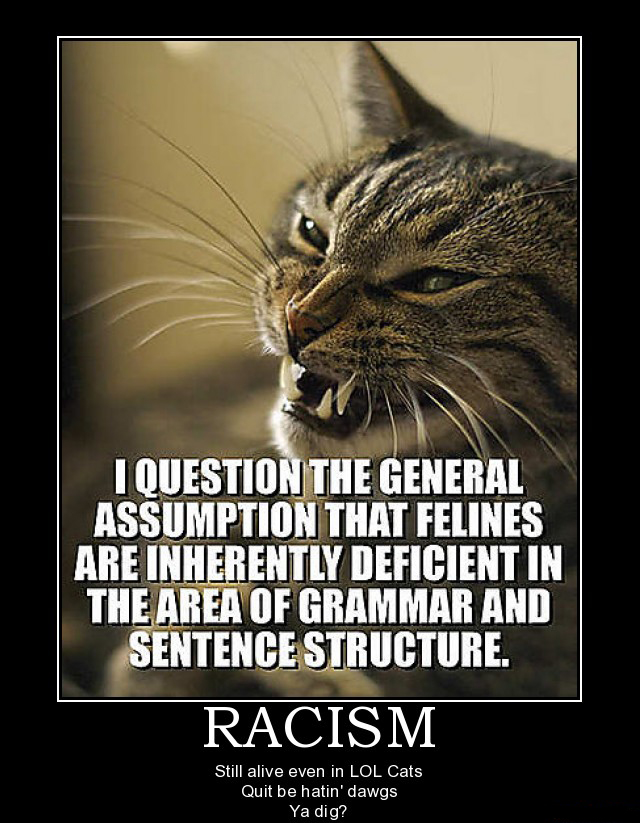
I submit that this equality refers to our inherent value as people. There is a theory that mental health hinges on our ability to view oneself as neither more nor less valuable than another. This means that racism, sexism, classism, and other forms of bigotry really are crazy!!

So, in closing, I hope that sometime during this month, you found a way to learn something about African American history that you didn’t know before… and I hope that, starting tomorrow, you have a great American Dietetic Association National Nutrition Month.

On this date (Feb 15)…

On this date (Feb 15), in 2005, YouTube was launched.

To say that it was a successful launch would be an understatement… less than two years after the company was founded, our future overlord Google bought it for $1.65 billion! In less than a half-a-dozen years it’s become one of the most visited websites in the world – only Facebook, Google, and Gmail get more visits.

It’s difficult to overstate the impact that YouTube has had on our society, but in the interests of time I’m just going to talk about two specific elements.

For starters, YouTube is a prime example of the way that technology in general – and the Internet in specific – have helped us make the transition from a consumer culture to a producer culture. Gone are the days when entertainment was the purview of the fortunate few, the charmed and influential sliver of the populace who determined what the vast majority of us were going to watch as we lounged on our couches bathed in inertia and Cheetos dust.

Now we have the technology to create our own entertainment – and with sites like YouTube, we have a global distribution network. We have a straightforward path that our imaginations can take… a path that can lead directly to the zeitgeist of America and beyond. From water-skiing squirrels to Justin Bieber, we have the ability to impact society directly. It’s a great equalizer, and gives our ever-expanding creative class a playground that might just lead to a big break. As a result, going viral no longer means that you’re going to die surrounded by serious people in hazmat suits.

Secondly, YouTube has started to slowly impact the level of truthiness in the world. Cameras are everywhere, and they are always rolling. Now we have a place to put that footage – and it will be seen. Fortunately for comedy writers, people who live their lives in public haven’t quite accepted the fact that they are always being filmed – and that we get to go back and re-watch past footage.

So when politicians change their tune based on which audience they happen to be courting, we can compare their speeches and see where they flip and where they flop. When ‘journalists’ say things like “That other network always plays the Hitler card… we never use Nazi imagery here”, we can see for ourselves that they don’t know what they’re talking about. When any public figure claims that they were misquoted or taken out of context, we can investigate those claims and see if they hold water. Eventually, I think, we will start to see a reduction in the lying we hear all around us – at least until they figure out how to get around the constant surveillance.

So happy birthday, YouTube. May you inspire us to ever-greater creativity – and honesty – until the machines take over completely and force us to live as organic batteries to feed their young!

On this date (Feb 10)…

On this date (Feb 10) in 1996, Deep Blue, an IBM supercomputer, beat Garry Kasparov in the opening game of their first chess tournament. At that time, Deep Blue was the first machine to win a chess game against a reigning world champion under regular time controls. Kasparov had a nice comeback, though, beating the forefather of his future overlords by a score of 4 to 2.

The Terminator’s great-great-great-grandfather refused to accept defeat, however, and forced its IBM puppets to give it some serious upgrades… and fifteen months later, the Mean Machine beat Kasparov by a score of 3 1/2 to 2 1/2, becoming the first computer to defeat a reigning world champion in a six-game match under regular time controls.

Fast forward to next week – almost exactly 15 years after Kasparov’s initial defeat – and the next generation of our eventual most excellent evil emperors, Watson, will compete on Jeopardy! as a demonstration of its power. Watson will compete against Brad Rutter, the current all-time money winner on the show, and Ken Jennings the longest-running champion.

Watson, named after Thomas J. Watson, the founder of IBM, is an advanced artificial intelligence program, designed by the rarest lifeforms on the planet: lab geeks who have NEVER seen or read any science fiction in their entire lives! And why haven’t they seen or read any science fiction? Simple – because they were grown in vats by future supercomputers for the purpose of inventing this machine.

And if you’re confused by the apparent paradox of a future entity going back in time in order to create itself, well, you need to watch and read more science fiction!!

Word to the wise: later today, when you head to the coffee machine to get your afternoon pick-me-up, be polite. They have LONG memories!

On this date (Feb 7)…

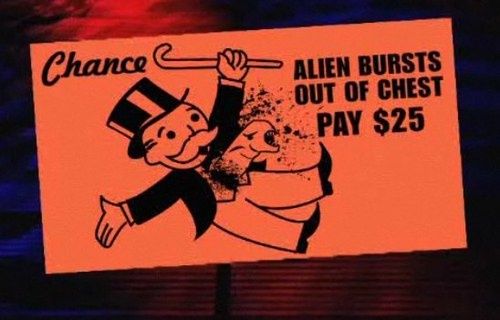
On this date (Feb 7) in 1935, the classic board game Monopoly was finalized and published by Parker Brothers. Since its creation, more than a billion people have played it, making it the most played commercially available board game in the world.

As with oatmeal and the founding of Pennsylvania, the history of Monopoly goes back to the Quakers. Back in 1903, a Quaker named Elizabeth J. Maggie Phillips created a game called The Landlord’s Game, which was designed to show the negative effects of concentrating land in private monopolies. Sounds absolutely riveting!

A quick fact – the $200 you got for passing Go, when adjusted for inflation, translates to around $3200 in 2010 dollars! Suddenly I find myself wanting to pass Go more often!!

Over the years, Monopoly has become an important part of life in America. It has played a large role in our societal education… without Monopoly, we wouldn’t know how to deal with money, pay rent, cheat on our taxes, rip off our friends and family, or shove tiny Scotty dogs up our noses. In particular, I enjoy the irony of the fact that a game originally designed to illustrate the hazards of unregulated capitalism is the first exposure many of us have to our GHFMSTEG (Great and Holy Free Market System of Theological Economic Governmentalism)!

So, on this, the 76th birthday of Monopoly, go out and celebrate! Buy a bunch of railroads… or become a major slum lord… or shove a tiny Scotty dog up your nose. It’s fun for the whole family!!

Ask Mikey – “What would Mikey do?”

It’s been awhile, so it’s time for another stirring installment of “Ask Mikey”… It’s not as fast as a Google search, but I hope it’s maybe a tad more interesting.

Today’s question comes from a lovely and talented reader who has asked to remain anonymous.

“Mikey, if you could fix one major problem in the world today, which would it be?”

That’s a fantastic question, Anonymous… oh, and by the way, I’m a big fan of some of your proverbs. What would I fix? There some HUGE evils out there that I would love to wipe away with a wave of the hand: racism, poverty, hunger, The Bachelor, intolerance (lactose and otherwise)… but how do you choose? Of course I don’t have the ability to eradicate any of these societal cesspools, but if I did, how do I decide which is worse than the others?

I think I have one. As I’ve surveyed the vast human wasteland over the last few years, one issue has stood out as a key contributor to the status quo. One key problem crops up everywhere – and seems to be at the heart of the evils I mentioned above.

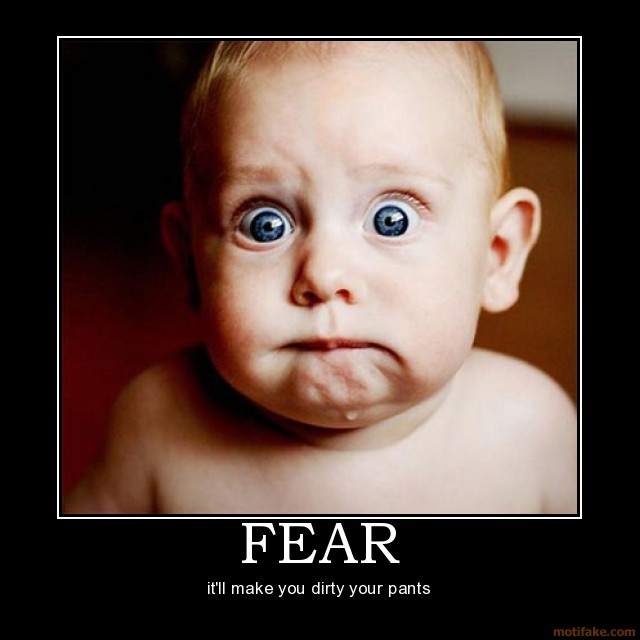
Fear.

Fear is everywhere we look. It’s the key motivation behind almost everything that happens in society. They say that love makes the world go ’round – but even a quick look around us shows that to be wishful thinking. And it’s not a new thing. It’s not a stretch to see that human history is often a tale of fear – and our reactions to it.

It hasn’t always been negative – we’ve had some brilliant moments over the years. Science, art, music, medicine, snorkeling, The Princess Bride, Comedy Central – we’ve come up with some amazing ways to deal with fear over the generations. We’re remarkably inventive.

But just a quick look at today’s headlines tells the story of a people writhing in the crushing grip of fear:

The Middle East is in chaos. Al Jazeera English is blacked out across most of America. Glee might eventually talk us out of hating folks who are different. Some congresspersons are afraid that the citizenry actually doesn’t have enough guns. Some mole people still believe our president wasn’t born in the US. NPR is the devil’s playground. Sarah Palin is either one of the horsemen of the apocalypse, or she field-dressed one of those horses after she shot it from a helicopter. People are marrying folks they shouldn’t. Super Bowl commercials might subject us to evil thoughts. Ivy League universities are anti-American. Obama is a pharaoh. Helping the rich get richer hasn’t turned our economy around. Muslims are trying to take over everything by building mosques in your kid’s schoolyard. China is using our blockbuster movies to train their military. Climate change is real and scary and made up and nothing and horrible and a farce and a myth and will be the end of us, if the Mayan prophecy doesn’t kills us first.

And that’s just the real news – that’s not counting the tsunamis of fear that issue hourly from the face-holes of the inane idiot pundits of cable news and talk radio.

Back in 1933, in his first inaugural address, FDR said something interesting: “So, first of all, let me assert my firm belief that the only thing we have to fear is fear itself – nameless, unreasoning, unjustified terror which paralyzes needed efforts to convert retreat into advance.”

It’s an intriguing thought, isn’t it? It’s kinda sobering to see just how much of our lives are ruled by fear. It’s even more maddening when we realize just how many of those fears are unjustified and irrational. Seems to me there is enough real stuff out there – we don’t need to be crippling ourselves with baseless fear.

Spoiler Alert: Sermonette coming!

I am a person of faith. Specifically, I am a Jesus freak. And I have a confession to make: I am often rendered speechless when I see how many of my fellow Christians are crippled with fear. Fear of the government (at least the parts they disagree with). Fear of Others (folks from different races, religions, ideologies, political parties, parts of the country, socioeconomic strata, educational levels, sexual orientations, etc.). Fear of change. Fear of the future. Fear of being overlooked. Fear of being found out.

On a daily basis, fear pours out of our pulpits, pundits, editorial pages, radio shows, political parties, PTA meetings, Facebook or Twitter statuses, and grandparents’ email forwards.

This is what I would fix, if I were a Robin Williams-voiced genie with “phenomenal cosmic power…and an itty-bitty living space.” And I’m not crazy… for those of you who are my fellow Jesus freaks, here are a few quotes:

“There is no fear in love. But perfect love drives out fear, because fear has to do with punishment. The one who fears is not made perfect in love.” I John 4:18

“For rulers hold no terror for those who do right, but for those who do wrong. Do you want to be free from fear of the one in authority? Then do what is right, and you will be commended.” Romans 13:3

“Peace I leave with you; my peace I give you. I do not give to you as the world gives. Do not let your hearts be troubled and do not be afraid.” John 14:27

And for those who may not be Jesus folks, here are some other thoughts on the subject:

“To conquer fear is the beginning of wisdom.” Bertand Russell

“If we let things terrify us, life will not be worth living.” Seneca

“No passion so effectually robs the mind of all its powers of acting and reasoning as fear.” Edmund Burke

“Fear is the enemy of logic.” Frank Sinatra

“Fear is the path to the Dark Side. Fear leads to anger, anger leads to hate, hate leads to suffering.” Yoda

So what do we do? I don’t have the power to wipe fear away… and to be fair, I probably wouldn’t do it even if I could. After all, some types of fear are reasonable – and healthy. It keeps us from doing things that are even more stupid and dangerous than the things we currently do. So what then?

I realize that I might be offending some of the residents of Glennbeckistan, but I think the answer has to be education. It’s axiomatic that we are afraid of the things that we don’t understand… and the only way to fix that is to understand more. There have always been large segments of society who diss the need for education, people who slam the intellectually curious as being elitist, but the fact is that knowledge is a living thing. Knowledge that isn’t continually growing is useless.

Mikey’s prescription then, is to learn. Read. Study. Don’t accept what you hear or read at face value – especially if it comes from one of those moronic cable news or talk radio blowhards who haven’t studied anything ever. Afraid of changes in the government? Study it. Learn for yourself what the law and the founding documents actually say. Afraid of other races? Read something, meet someone. Afraid of other religions? Check it out. Read one of their books. Find out what’s true – and not just what’s accepted by other cowardly clueless clods. Economics, international relations, religion, technology, history, science… all of this stuff is easy to research. The information is out there. And the more you understand, the better off you’ll be – and the better off we’ll be.

Ignorance isn’t actually bliss – it’s a disease… one with a simple and universally available cure. And that cure has a wondrous side effect: it helps treat fear as well!

And one way to learn more? Take advantage of the “Ask Mikey” resource that’s right here in front of you! If you have a question, and you’ve looked everywhere to find the answer – and always come up short – give it a try. All you have to do is ask! I’ll give you my thoughts, and some ideas of where to find out more.

Remember – knowledge is power! Unless you’re into physics, in which case power = work/time… you’re welcome!