
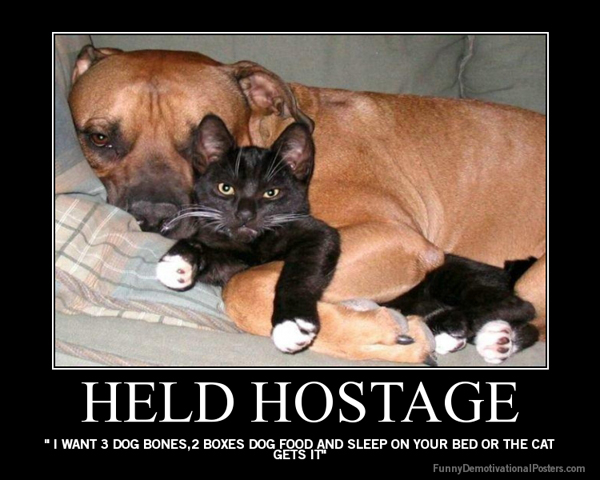
On this date (Aug 23), in 1973, a dude named Jan-Erik Olsson entered Kreditbanken, a bank in an area called Norrmalmstorg in the central part of Stockholm, Sweden… and tried to rob the joint.
It didn’t go too well.
He took some hostages, and demanded that his friend, another repeat offender named Clark Olafsson, be brought to him for help… along with 3 million Swedish Kronor (something like $730K in 1973 US dollars), a couple of guns, body armor, and a fast car. Olafsson was delivered, and the baddies took the hostages and barricaded themselves inside while negotiations went on about the rest of the demands.
If you’re wondering why I care about a Swedish bank robbery during the 70s, hold your horses… I’m getting to it!
During the six days the hostages were in the vault with these Swedish meatballs, they actually started to become emotionally attached to their captors. (Yeah, I’m sure you see where this is going now. You may have a cookie.) The attachment became so strong that the hostages turned down further assistance from the cops and government officials. They even defended the criminal geniuses after the the ordeal was over.
Olsson was sentenced to 10 years in prison. While he was in, he received many letters from female admirers who thought he was hot. The attempted robbery was the first major crime covered by live television in Sweden, so he was relatively famous by this point.
Olafsson turned on his partner-in-crime, claiming that he wasn’t really involved – he was only trying to help the hostages. When it was time for the appeal, the jury believed him, and his conviction was overturned. As time went by, he met one of the hostages, Kristin Enmark, and the two became friends. In fact, their families became close friends… which, I’m sure, was great for the kids at ‘show & tell’.
Immediately after the failed robbery, and for a long time after, the hostages claimed repeatedly that they were more afraid of the cops than they were of the robbers. A criminologist named Nils Bejerot was the first to use the term Stockholm syndrome, which has entered the lexicon of psychological jargon.
Clinically, the concept is most often called capture-bonding, an idea that doesn’t necessarily involve hostages. Other examples of the capture-bonding mechanism include battered-wife syndrome, some SMBD practices, fraternity hazing, and some aspects of military basic training.
Basically, the syndrome is a coping mechanism, designed to help us adapt to horrible and painful situations.
Which, if it’s true, should mean that at some point in the future, I’m going to come to appreciate – and eventually even crave – these stupid political campaign commercials.
There might be something to that… there has to be some reason we keep electing the same criminally stupid people to Congress…
My name is Mikey, and I approve of this message.