
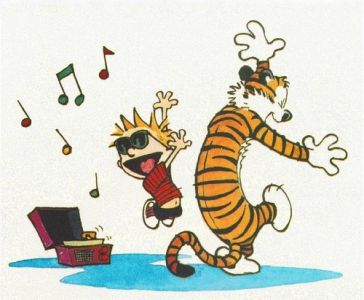
On this date (Aug 20), in 1882, Calvin & Hobbes’ favorite piece of music debuted in the Cathedral of Christ the Saviour in Moscow.
Officially called “The Year 1812, Festival Overture in E flat Major, Op.49”, we normally just call it the 1812 Overture, by Pyotr Ilyich Tchaikovsky.
It’s one of those pieces of music that appeals to the full spectrum of listeners. Artsy-fartsy folks resonate with its passion, the irony of its anachronism, and its powerful, bombastic themes. And those folks who are more, shall we say, Nascar-oriented, dig it because, “Hey, bubba, it’s gots cannons!”
The overture has become a patriotic American staple, providing the soundtrack for countless July 4th fireworks shows across the country – which is fun, since it wasn’t about us at all.
Since the year 1812 is mentioned in the title, many assume that it’s an homage to the American victory over the British in the War of 1812. After all, that war inspired the lyrics of The Star-Spangled Banner, so why not the 1812 Overture as well?
As it turns out, Tchaikovsky was Russian, and while he did make some American appearances (most notably, the inaugural concert of Carnegie Hall in 1891), he wasn’t as interested in American history as you might think.
The overture actually tells the story of how Russia sent Napoleon packing in 1812. You can literally hear the victory as Russia’s old national anthem, God Save the Czar, overpowers the French national anthem, La Marseillaise.
Think of it as the original west coast / east coast hip hop rivalry, but with bigger guns.
And if you are among the Nascar-Americans, don’t worry. This was well before Russia ‘fell into the hands o’ them Commies’, so it’s still safe to listen to it on July 4th.
So, let’s enjoy those cannons. And next time Marvin the Martian asks his timeless question, “Where’s the kaboom?”, we can smile – because we know!