
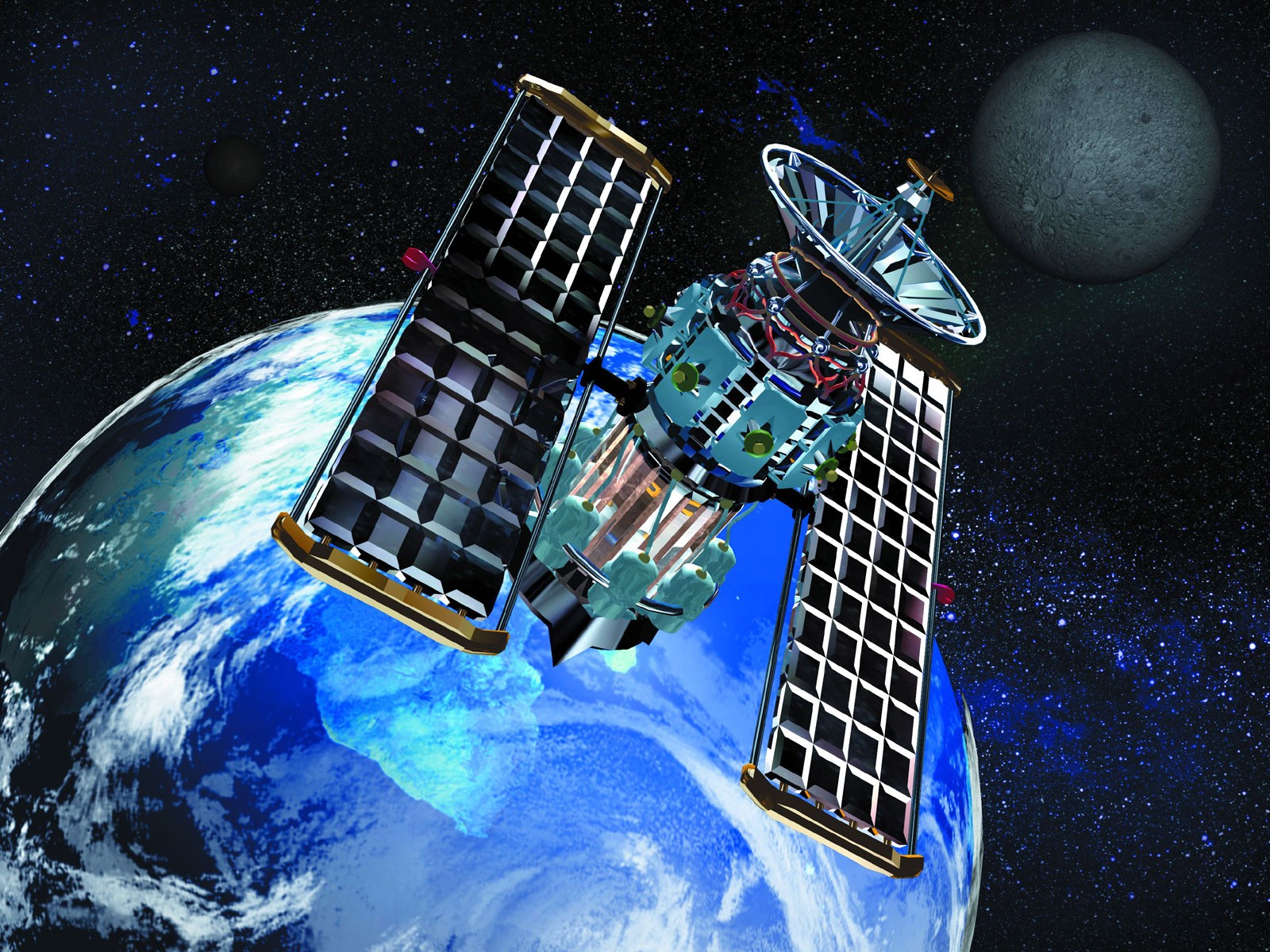
On this date ( Dec 8 ) 1993, the US Secretary of Defense made the Global Positioning System (hereafter known as GPS) available to civilian use.
Back in ’57, the night after the Soviets launched Sputnik (the first man-made satellite, for those of you who don’t remember anything before the second season of Lost), geeks at MIT were able to track Sputnik’s orbit by its radio signal. Some rocket scientist there realized that if you can track satellites from Earth, you can probably do the opposite.
So the geniuses in the US Navy started working on it. By the mid-60s, they had come up with a way to help out their submarines, figuring the Doppler Effect on radio signals to get positional data.
The Navstar Global Positioning System launched its first official GPS satellite in 1978. They’d originally planned for 18 satellites, but as they realized that wouldn’t be enough, they eventually sent up 24 – which included 3 back-up satellites.
Then, on Dec 8, 1993, Secretary of Defense Aspin told Secretary of Transportation Pena that the system was operational, so GPS was opened to the Transportation Department, whose job it was to make it available for civilian use.
By April of 1995, the US Air Force Space Command declared that GPS was in “full operational capability”. Does anyone besides me think it’s just too cool that we have a Air Force Space Command???
At that time, the civilian GPS was accurate up to 100 meters – the military one was accurate to within 22 meters… pretty good.
By now, at the end of 2010, signal augmentation and improved monitoring capabilities have gotten to the point where GPS is now accurate up to 4 inches. Four inches!!
What started out as a way to more scientifically moan about how the Soviets were ahead of us in the Space Race has turned into a ubiquitous tool. Now we use it to find the nearest gas station, track taxis and buses, locate the garage apartment to deliver our rush packages, track the migratory patterns of whooping cranes, play strange geocaching games with other bored geeks, oh, and track our submarines.
Most importantly, in my opinion, GPS is the ultimate in face-saving technology. We tapped the brightest scientific and analytical minds in our nation, turned them lose with powerful computing equipment, and tasked them with a single, vital, essential goal: find a way to keep men from having to ask directions.
Mission accomplished!